A strong response to goose grazing and drought
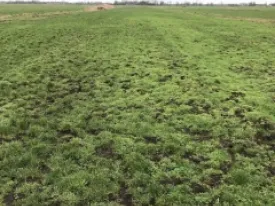
In several grassland regions, geese are becoming an increasing challenge. Large flocks can graze off young grass shoots, particularly in early spring. As a result, less grass is available for the first cut, reducing forage production. When this grazing damage coincides with dry conditions, grass finds it even more difficult to recover.
This raises an important question for many livestock farmers: can the impact of goose grazing be reduced through the right choice of grass species?
Based on an article published by Bauernblatt
Field research provides answers
To address this question, the Ministerium für Energiewende, Klimaschutz, Umwelt und Natur (MEKUN) and the Landwirtschaftskammer Schleswig-Holstein conducted a practical field study in an area heavily affected by goose grazing. The trial compared perennial ryegrass, festulolium, and soft-leaf tall fescue.
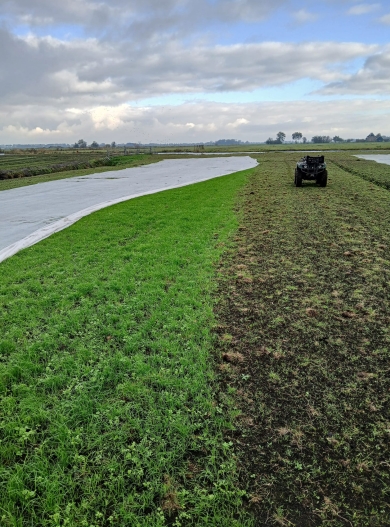
For each grass species, part of the trial area was protected from geese while another part was exposed to natural grazing pressure. This enabled researchers to accurately determine the impact of goose grazing on the yield of each grass species. In addition, they assessed forage quality, silage characteristics, and sward development.
The conditions were particularly interesting because the trial period was characterised not only by high grazing pressure but also by an extended dry spell in spring. These circumstances closely reflect the challenges many livestock farmers face today.
Soft-leaf tall fescue maintains higher yields
The results show that deep-rooting grass species cope better with the combination of goose grazing and drought than perennial ryegrass. Both festulolium and soft-leaf tall fescue achieved substantially higher yields on plots affected by goose grazing.
Compared with perennial ryegrass, soft-leaf tall fescue produced approximately 38% more dry matter under goose-grazing conditions.
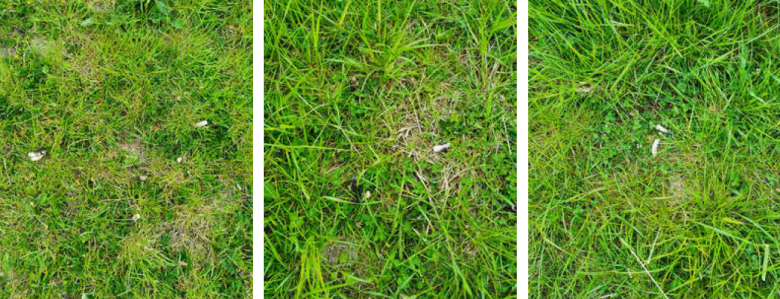
The trial also showed that geese grazed perennial ryegrass more heavily, whereas soft-leaf tall fescue proved less susceptible to grazing damage once successfully established. At the same time, its deep root system provided a clear advantage during the dry spring period.
What does this mean for your farm?
The study demonstrates that grass species selection can have a significant impact on yield security. On farms regularly affected by goose grazing, drought, or a combination of both, deep-rooting grass species can contribute to a more reliable forage supply.
These findings confirm what we have observed in practice for many years: soft-leaf tall fescue is one of the most robust grass species under challenging conditions such as goose grazing and drought stress. NutriFibre® is based on this grass species and builds on exactly these strengths.
Want to learn more about NutriFibre?
Goose grazing and drought are just two of the challenges where NutriFibre® can make a difference. Discover the benefits for yield security, persistence, forage quality and animal health on our NutriFibre page.
Read the full study
Interested in all the details of the research conducted by MEKUN and the Landwirtschaftskammer Schleswig-Holstein? Read the article Robuste Gräser gegen Gänsefraß published by Bauernblatt.