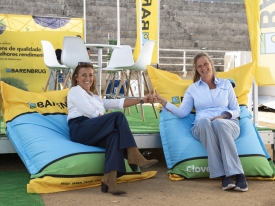
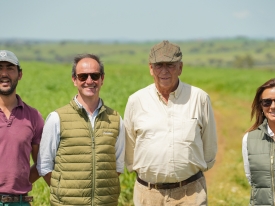
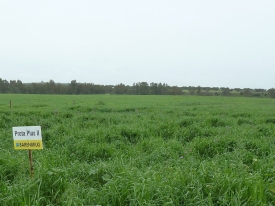
Lusosem visits Barenbrug to exchange knowledge on resilient grassland farming
A technical visit from Portuguese distributor Lusosem to Barenbrug highlighted how plant breeding, multi-species forage mixtures and grassland management can help farmers build more resilient farming systems for the future. The visit also reinforced the long-standing partnership between the two companies and their shared commitment to sustainable agriculture.
Based on an article of: revista-ruminantes.com
Barenbrug and Lusosem share a strategic partnership built on a common vision of sustainable growth and long-term collaboration. By combining knowledge, experience and regional strengths, the two companies work together to strengthen their product portfolios, support customers and contribute to more resilient farming systems across Europe. Sustainability remains a key focus, with ongoing efforts to develop solutions that encourage efficient land use, responsible resource management and productive grassland systems.
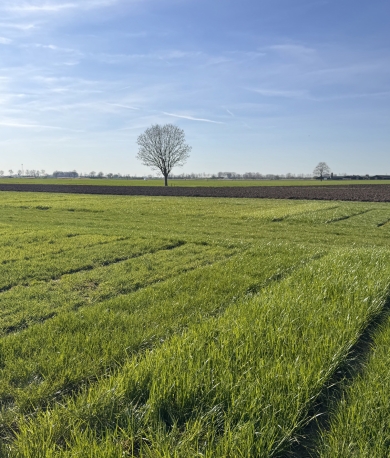
Sharing knowledge on future forage systems
As climate change, resource efficiency and environmental performance become increasingly important for livestock farming, Lusosem and representatives from the Cooperativa União Agrícola de São Miguel (CUA) in the Azores visited the Netherlands to learn more about Barenbrug’s forage breeding programme and grassland innovation activities. The programme included a visit to Barenbrug's forage trial fields in Homoet and meetings with leading dairy farmers who use these solutions in practice.
Exploring innovation in the field
At the trial fields in Homoet, visitors were introduced to a wide range of forage varieties and multi-species mixtures developed by Barenbrug. Tom Niehof, International Product Manager Forage at Barenbrug, explained how breeding priorities have evolved in response to changing agricultural challenges.
For decades, we evaluated varieties mainly on yield. Today, the challenges are much more complex: producing with fewer resources, reducing environmental impact and adapting to increasingly unpredictable conditions.
Tom Niehof - International Product Manager Forage Barenbrug
The trial fields demonstrated how modern forage systems are designed to combine productivity, nutritional value and resilience. Particular attention was given to the role of species diversity in improving persistence, reducing risk and maintaining stable performance over time. Visitors also discussed practical grassland management topics, including the well-known "third leaf principle" and the importance of correct grazing and cutting timing to maximise forage quality.
Learning from dairy farmers
The visit also included two dairy farms where grass production plays a central role in the feeding strategy.
In Groesbeek, William Nillesen manages a farm with 170 dairy cows and 75 youngstock. With an average production of close to 40 litres of milk per cow, he combines grazing with a zero-grazing system, harvesting fresh grass daily for inclusion in the total mixed ration. The farm manages around 120 hectares of maize and grassland and aims to maximise efficiency through cost reduction and by making the most of home-grown protein.
This production model aligns with the requirements of the Dutch market, where some processors and retail chains offer additional incentives for farming practices linked to sustainability, biodiversity and animal welfare.
In Arkel, Job van de Water farms 37 hectares of grassland to feed 80 dairy cows. Approximately 85% of the forage consumed by the herd comes from grass, supplemented with small amounts of maize. One distinctive feature of the farm is its regular overseeding programme, carried out several times a year. This practice helps maintain grassland quality without the need for full reseeding. Some of the fields are more than two decades old and continue to deliver high levels of productivity and quality.
Preparing for tomorrow's challenges
According to Manuel Laureano of Lusosem, forage production is entering a new phase in which resilience and resource efficiency are becoming just as important as productivity.
Forage production can no longer be assessed solely on yield. The challenge is to produce more feed with fewer resources, reduce environmental impact and adapt to increasingly variable climatic conditions.
Manuel Laureano - Lusosem
Discussions during the visit highlighted the growing importance of forage mixtures that combine productivity, nutritional quality, efficient nutrient use and drought tolerance. Increasing on-farm protein production is also expected to play a key role in reducing dependence on imported feed ingredients.
A shared vision for the future
Barenbrug's long-term breeding programme is already focused on developing varieties that will meet the demands of future farming systems. Priorities include digestibility, crop health, mineral efficiency and resilience to climatic extremes. Multi-species mixtures and legumes are expected to play an increasingly important role, supporting productivity while contributing to biodiversity, nitrogen efficiency and sustainable farming practices.
For Lusosem and Barenbrug, the visit demonstrated the value of collaboration and knowledge exchange in addressing the challenges facing livestock farming. By working together and sharing expertise across markets, both companies aim to help farmers build resilient, productive and sustainable grassland systems for the years ahead.