
Restore your drought-affected horse pasture
Has drought turned your horse pasture into a yellow field? September is the ideal month to restore the grass in your pasture. With the tips below, your horse pasture will soon be green and healthy again.
Graze occasionally
Occasional grazing during dry periods can support pasture recovery. Allowing your horses to graze the remaining grass during the evening hours benefits the pasture. Keep a close eye on the condition of horses that are kept outdoors full-time, particularly young horses. Due to the limited grass availability, they can lose weight quickly.
Be careful with mowing
Mowing during periods of drought can cause significant damage to your pasture. If there is less than 20 cm of grass available (2,000 kg per hectare), it is better to postpone mowing. After mowing, the grass plant uses its reserves to produce new leaves. During dry periods, however, these reserves are needed for the plant to survive. In addition, driving machinery over the pasture places extra stress on the sward, and wheel tracks may remain visible for a long time. If you do decide to mow, do not cut the grass shorter than 7 cm.
Has your grass survived the drought?
Grass is capable of surviving a period of drought. You can easily check whether your grass has come through the dry period successfully. Cut out a section of turf measuring approximately 20 by 20 cm and place it in a container of water for 10 minutes. If white roots or new green shoots appear within a few days, the grassland is likely to recover after the drought. If this does not occur, the grassland will probably not recover. In that case, pasture renovation is the only option to restore your horse pasture.
Watch out for rough meadow-grass
If new plants with white stem bases appear in the turf sample, be alert. This may indicate a high risk of rough meadow-grass and annual meadow-grass becoming established in your pasture. Horses grazing in pastures with a high proportion of rough meadow-grass are at an increased risk of sand colic. Rough meadow-grass can be controlled through regular harrowing and by overseeding with Horse Master.
New sowing
Is your grassland beyond recovery? Then reseeding is the only option. In that case, it is important to first thoroughly eliminate couch grass and weeds from the field. Ten days later, you can cultivate the soil and reseed the grassland. For the best results, choose the Horse Master grass seed mixture. The grass varieties in Horse Master have been specially selected for horses.
Read more about sowing a horse pasture here.
A strong, green pasture for your horse
A beautiful green pasture with a durable sward and sufficient grass to graze your horse every day. This is the wish of every horse owner. Unfortunately, many horses are still kept in trampled pastures containing grass intended for cattle. This can lead to a range of health issues. That is why Barenbrug developed Horse Master.
Horse Master is a balanced grass seed mixture. A Horse Master pasture provides a durable sward, rapid regrowth, and grass that is rich in structure and low in fructan. Click here for more information about Horse Master.
Healthy forage for horses
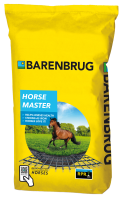
Horse Master
-
Plenty of grass for grazing
-
Highly resistant turf with RPR technology
-
Good regrowth
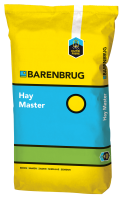
Hay Master
-
Fresh and tasty hay for your horse, cows or small livestock
-
High roughage production
-
Excellent drought resistance