
Healthy grass for horses
Healthy grass for horses contains low levels of sugar. This helps reduce the risk of laminitis in your horse. Paying attention to low-sugar grass is therefore essential if you want your horse to receive healthy forage. This applies to both fresh grass and hay.
Which sugars are found in grass?
Grass contains various nutrients, including sugars. These sugars can be divided into different types, such as glucose, fructose and sucrose (simple sugars), and fructan. Although they are often referred to collectively as “the sugar in grass”, they affect the horse’s body in very different ways.
Why is sugar-rich grass bad for horses?
Glucose, fructose and sucrose (simple sugars) are broken down in the small intestine into absorbable energy. Excessive amounts of these sugars can disrupt insulin regulation, which may result in laminitis.
Fructan is broken down in the large intestine. The intake of large amounts of fructan disrupts the bacterial population in the large intestine. This results in a decline in beneficial bacteria, leading to the formation of endotoxins. A healthy intestinal wall prevents these endotoxins from entering the bloodstream, but when the intestinal environment becomes acidic, endotoxins can pass into the blood. This can also lead to laminitis.
How does fructan accumulate in grass?
Fructan accumulates when grass produces more energy than it can use for growth. This mainly occurs under the following conditions:
- Sunny days combined with cold nights. In a way, fructan acts as the grass plant’s natural antifreeze.
- Drought or nutrient stress caused by insufficient or incorrect fertilisation.
- Limited regrowth, for example as a result of close grazing.
Under these conditions, sugar production continues, but the excess energy is stored as fructan.
Is there grass without fructan?
There is no such thing as grass without fructan, as fructan is naturally produced under normal growing conditions. However, there are differences in the amount of fructan produced by different grass plants.
Each year, Barenbrug evaluates the feed value of more than 70 grass varieties. Certain grass species are known for their low fructan content, but even within the same species, some varieties produce more fructan than others. The varieties used in Horse Master® contain lower levels of fructan than varieties commonly used in grass for cattle.
How can you prevent excessive fructan levels in grass?
You can help prevent high sugar levels in your horse pasture by choosing the right pasture mixture and applying good pasture management practices. Click here to learn more about what you can do to improve your pasture management.
Horse Master. Healthy grass for horses
Horse Master is a pasture mixture specially tailored to the needs of horses. It contains grass varieties with a low growing point, enabling rapid regrowth after grazing or mowing. The varieties in Horse Master have also been selected for their low fructan content. The RPR technology in Horse Master creates a natural network of roots with horizontal stolons. This results in a very dense and durable sward that can withstand intensive hoof traffic.
Healthy forage for horses
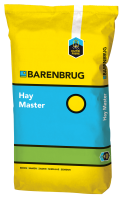
Hay Master
-
Fresh and tasty hay for your horse, cows or small livestock
-
High roughage production
-
Excellent drought resistance
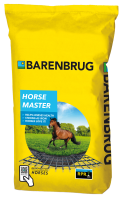
Horse Master
-
Plenty of grass for grazing
-
Highly resistant turf with RPR technology
-
Good regrowth